



AI Skin Analyzer
Comprehensive Health Management: Covers five dimensions of detection including face, scalp, sunscreen, and fluorescent agents, and supports health data management such as weight (BMI) and sleep records.
Intelligent Marketing Assistance: Provides data statistics, comparative analysis, and intelligent product recommendations to support store customer management and marketing decisions.
Description
Technical Parameters
Product Introduction – Core Functions & Technical Overview
The AI Skin Analyzer by Benomi is a diagnostic imaging system built to deliver objective, data-backed evaluations of facial and scalp health. Instead of relying on visual inspection alone, the device uses nine distinct spectral imaging modes paired with an embedded AI processing chip to uncover skin characteristics that standard lighting cannot reveal.
During a single scan, the analyzer cycles through a sequence of controlled light sources-white, cross-polarized, directional, UV, Wood's, and composite UV-each interacting with skin tissue in a specific way. Cross-polarized light, for instance, removes surface glare to make vascular patterns and subtle redness visible beneath the epidermis, while UV fluorescence highlights porphyrin distribution linked to acne-causing bacteria and excess sebum.
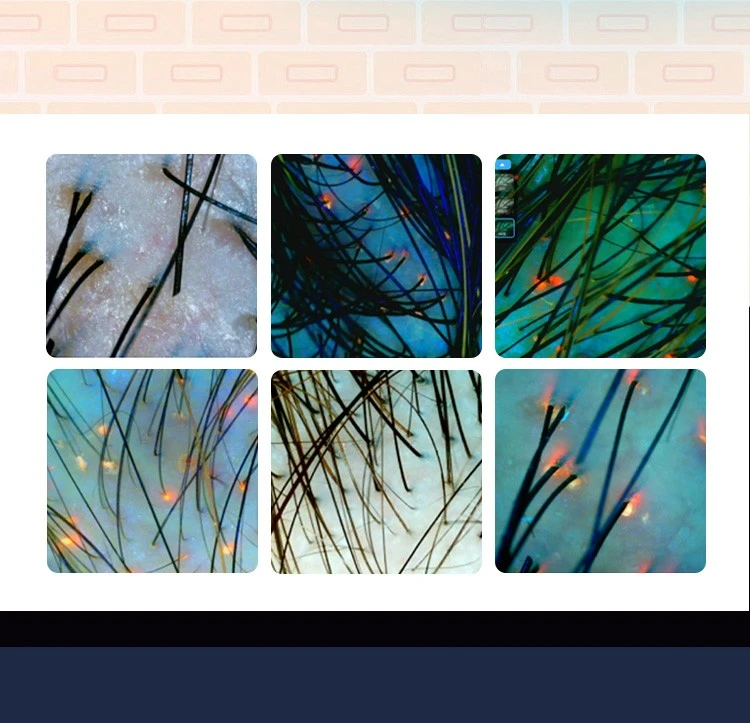
Images captured by the system are uploaded to cloud-based algorithms that return quantitative measurements across a range of indicators: pigmentation uniformity, pore size and density, wrinkle depth, estimated collagen density, sebum levels, and hemoglobin concentration (displayed as sensitivity heatmaps). The device also supports scalp analysis, providing metrics on hair density, shaft thickness, surface oiliness, and deep UV-level sebum. A motorized chin rest and adjustable-height bracket help ensure consistent positioning for front, left, and right lateral views-an essential feature for reliable progress tracking.

Key Advantages at a Glance
Nine-Spectrum Image Acquisition – The analyzer sequentially applies white, cross-polarized, directional, UV, Wood's, and composite UV light sources. This layered approach helps distinguish superficial concerns like surface dryness or open comedones from deeper issues such as dermal pigmentation and vascular sensitivity, all within one quick capture session.
AI-Driven Quantitative Analysis – An onboard AI chip interprets image data to detect and measure specific skin features, reducing the subjectivity often associated with manual visual assessment. The software can automatically flag areas of interest, including acneiform breakouts, follicular plugging, low-grade inflammation, and early pigment changes like chloasma.
Consultation-Ready Reporting – After analysis, the system generates a comprehensive report featuring RBX Red and Brown charts (hemoglobin and melanin mapping), collagen fiber diagrams for elasticity evaluation, and sensitivity heatmaps graded from blue (normal) to red (severe). These visuals support clearer, more confident treatment discussions with clients.
Built-In Scalp Diagnostics – Beyond facial imaging, the analyzer includes a dedicated scalp module. Practitioners can review hair density, strand thickness, surface grease scores, and sensitive red zones-valuable data points for clinics offering hair restoration, PRP therapy, or scalp health programs.
Business Support Features – The software includes a product recommendation engine that links detected skin conditions to specific retail or in-clinic treatments. Additional tools include customer demographic dashboards and comparative analysis views that allow side-by-side tracking of client progress across multiple visits.
Ergonomic, Clinic-Friendly Design – A magnetic shading hood minimizes ambient light interference. The chin rest rotates for lateral views, and the bracket adjusts infinitely to accommodate clients of different heights. A 3D simulation view lets operators examine skin texture from multiple angles and zoom in on localized problem areas.
Technical Specifications
| Specification | Details |
|---|---|
| Imaging Technology | 9-Spectrum Multispectral Capture |
| Light Sources | White, Cross-Polarized, Directional, UV, Wood's, Composite UV, RBX Processed |
| Processor | Integrated AI Intelligent Chip |
| Detection Modes | Full-Face AI Analysis, Scalp Analysis, Microflora Detection |
| Analyzed Metrics | Spots, Wrinkles, Texture, Pores, UV Spots, Brown Spots, Red Zones, Porphyrins, Sebum, Collagen Density, Hair Density/Thickness |
| Chin Rest | Rotating, Height-Adjustable (Front, Left, Right Positions) |
| Data Connectivity | Cloud Upload Capability, Local Storage Option |
| Software Functions | Comparative Analysis, Product Suggestion, Customer Statistics |
| Power Input | AC 110V–240V, 50/60Hz |
| Footprint | Compact Desktop Unit |


Where This Device Is Used
Medical Spas and Aesthetic Clinics – For documenting baseline skin conditions and monitoring treatment response after laser sessions, microneedling, or chemical peels.
Dermatology Practices – To track pigmentation irregularities (melasma, post-inflammatory hyperpigmentation), acne severity, and vascular conditions over time.
Beauty Salons and Wellness Centers – As a tool to guide retail product recommendations and demonstrate the visible effects of professional facial treatments.
Hair Restoration and Trichology Clinics – For evaluating scalp health, follicle status, and sebum balance before and during hair loss therapies.
Cosmetic Retail Environments – As an interactive diagnostic station to help customers better understand their skin type and choose suitable home-care products.
What the Images Show – Before and After
| Diagnostic Focus | Typical Pre-Treatment Findings | Observed Changes Post-Treatment |
|---|---|---|
| Pigmentation (RBX Brown) | Elevated melanin density in cheek and forehead areas; visible UV spot accumulation. | Reduced brown spot area and intensity; lighter appearance under Wood's light. |
| Vascular Sensitivity (RBX Red) | Yellow to red zones on cheeks and nasal sides indicating inflammation or visible capillaries. | Shift toward blue/green zones following anti-inflammatory or vascular laser treatments. |
| Pores and Sebum (Composite UV) | Bright orange fluorescence indicating porphyrin activity and oily T‑zone. | Reduced fluorescence and visibly refined pores after carbon peels or sebum-regulating protocols. |
| Collagen Density (Fiber Diagram) | Fragmented, discontinuous lines suggesting collagen fiber breakage. | More organized, continuous pattern following a course of collagen-stimulating therapies. |
| Scalp Health Metrics | High surface grease reading, visible follicular debris, lower hair density count. | Improved oil balance, cleaner follicles, and stabilization of density figures. |
Practitioner Feedback and Clinic Insights
Medical Aesthetician, Los Angeles – "The AI Skin Analyzer is now part of every new client consultation. The RBX images make sun damage and inflammation visible in a way that words can't. It helps patients understand why we're recommending IPL or a peel series. The before-and-after comparison tool is also excellent-clients can see the pigment fade even when they don't feel a difference."
Clinic Manager, London – "We used a basic camera before. The scalp module on the Benomi unit was the main reason we upgraded. For our PRP hair restoration clients, showing them actual density and follicle health metrics adds a layer of credibility. The scan takes under three minutes, so it doesn't slow down the front desk."
Skincare Retailer, Singapore – "The product recommendation feature tied to scan results has made a measurable difference in our conversion rate. When the analyzer flags dehydration or early fine lines, the system suggests specific serums and moisturizers. It feels like a professional recommendation, not a sales script."


About the Manufacturer – Benomi
Weifang Benomi Electronic Technology Co., Ltd. has focused on the research, development, and manufacturing of professional aesthetic and diagnostic devices for more than 18 years. Headquartered in Weifang, China, the company operates a dust-free production facility designed to protect sensitive optical sensors and electronic assemblies.
OEM/ODM Flexibility – Benomi supports custom branding for qualified partners, including free logo integration on the device housing and software interface. Language localization and report layout customization are also available.
Regulatory Documentation – The AI Skin Analyzer is produced under a quality system aligned with ISO 13485. Documentation supports CE conformity and FDA listing requirements for non‑invasive diagnostic imaging equipment.
Warranty and Support – A 2‑Year Warranty covers manufacturing defects. Technical questions are handled through a 24‑hour response system, with remote software updates and calibration assistance provided when needed.
Wholesale Information and Distribution Terms
Minimum Order Quantity (MOQ) – One (1) Unit. Sample orders are welcome for in‑clinic evaluation and staff training.
Customization Options
Software Branding – Logo placement on the boot screen and report headers.
Language Packages – Interface translation available for OEM distribution.
Report Personalization – Clinic contact details and branding can appear on client‑facing PDFs.
Shipping and Lead Times
Standard Orders – Dispatch within 3 to 5 business days after order confirmation.
Customized Orders – Allow 7 to 15 business days for branding and software configuration.
Freight Options – Air express (DHL, FedEx, UPS) or sea freight for larger volumes. Export documentation assistance is included.


Frequently Asked Questions
Q: How long does a complete facial and scalp scan take?
A: A full session-including front, left, and right facial views plus the scalp analysis-typically requires two to three minutes. The AI report appears within another 30 to 60 seconds.
Q: What do the RBX Red and Brown images actually show?
A: The RBX Red chart maps hemoglobin distribution, highlighting areas of increased vascular activity or inflammation. The RBX Brown chart isolates melanin concentration, revealing both surface pigmentation and deeper UV‑related changes that may not yet be visible to the naked eye.
Q: Is the UV light exposure during scanning a concern?
A: No. The UV flash is extremely brief (fractions of a second) and delivers far less exposure than a few minutes of ordinary daylight. The device is designed for safe, repeated daily use.
Q: Can the device show progress over multiple visits?
A: Yes. The software includes a comparative analysis mode. Side‑by‑side images from different dates are displayed with overlaid quantitative changes-for example, "Pore count reduced by 15%" or "Brown spot area decreased by 22%."
Q: What kind of internet connection is needed?
A: The AI processing uses cloud‑based algorithms, so a stable broadband or Wi‑Fi connection is recommended. If the connection drops temporarily, images are stored locally and queued for analysis once the connection resumes.
Hot Tags: ai skin analyzer, China ai skin analyzer manufacturers, factory
Send Inquiry


