


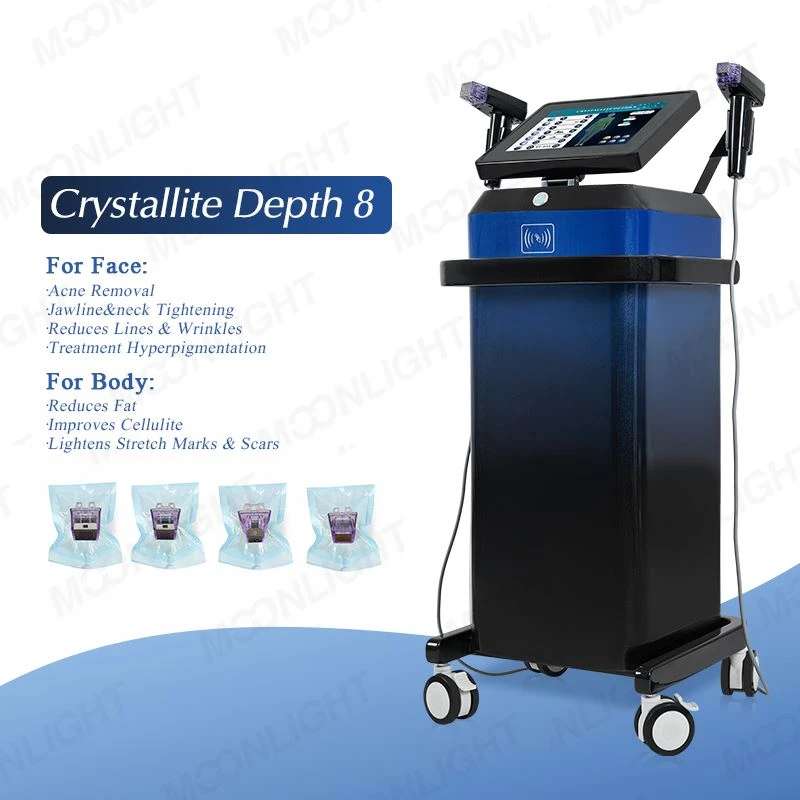

Crystallite Depth 8: A Fractional Microneedling RF Platform For Facial And Full-Body Remodeling
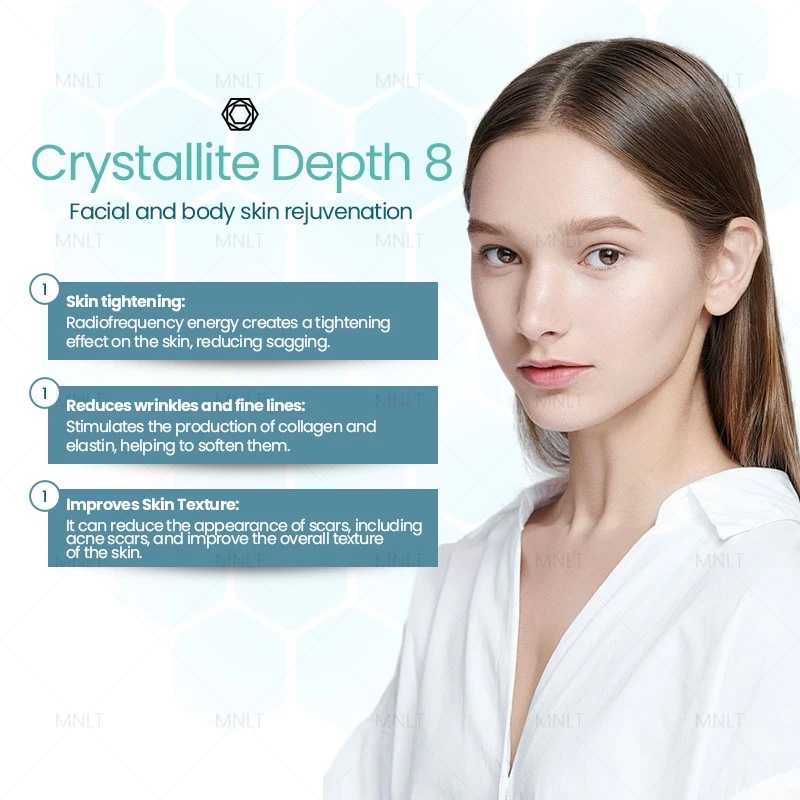
Crystallite Depth 8: A Fractional Microneedling RF Platform For Facial And Full-Body Remodeling suppliers
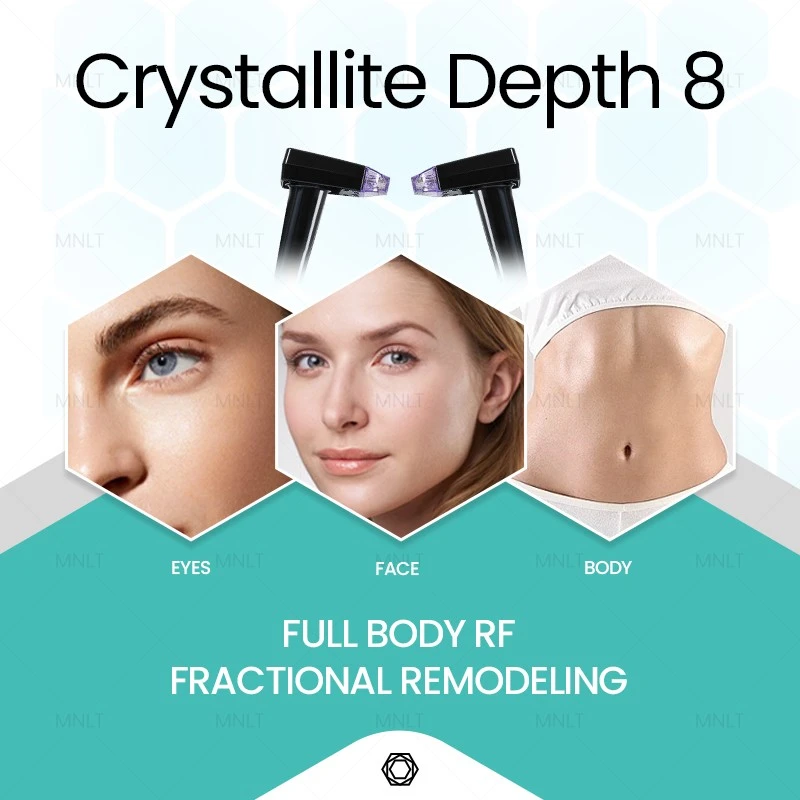
Crystallite Depth 8: A Fractional Microneedling RF Platform For Facial And Full-Body Remodeling factory
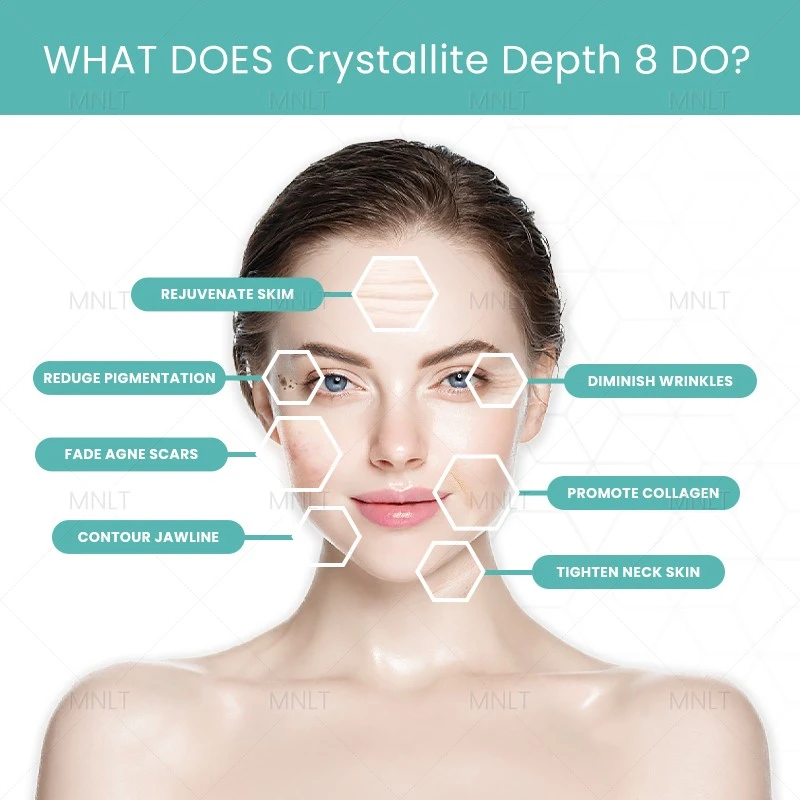
Crystallite Depth 8: A Fractional Microneedling RF Platform For Facial And Full-Body Remodeling best
Crystallite Depth 8: A Fractional Microneedling RF Platform For Facial And Full-Body Remodeling high quality
Crystallite Depth 8: A Fractional Microneedling RF Platform For Facial And Full-Body Remodeling price
Crystallite Depth 8: A Fractional Microneedling RF Platform For Facial And Full-Body Remodeling manufacturers
Crystallite Depth 8: A Fractional Microneedling RF Platform For Facial And Full-Body Remodeling factory
Crystallite Depth 8: A Fractional Microneedling RF Platform For Facial And Full-Body Remodeling
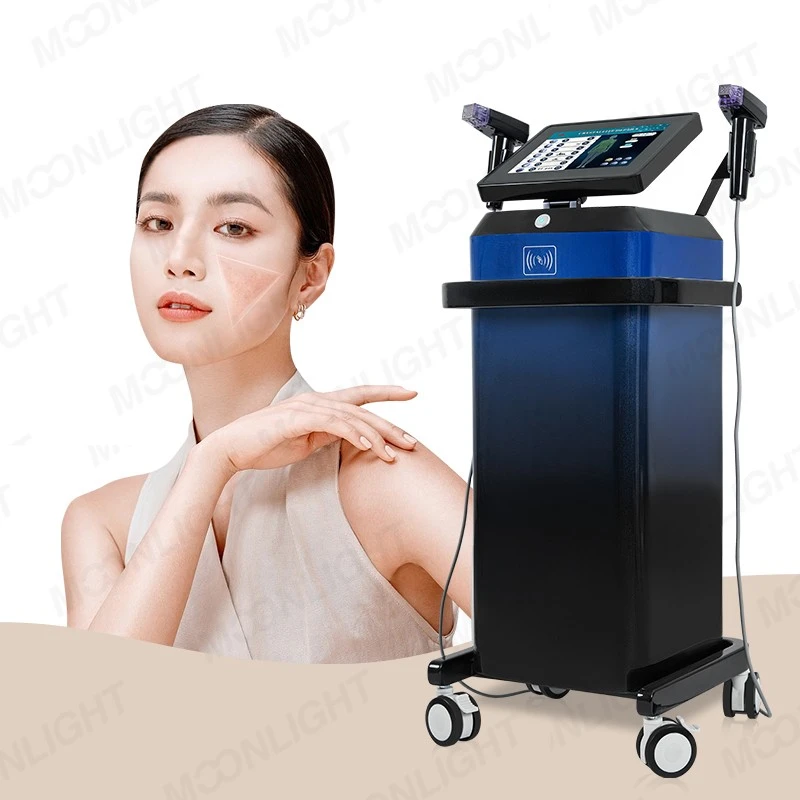
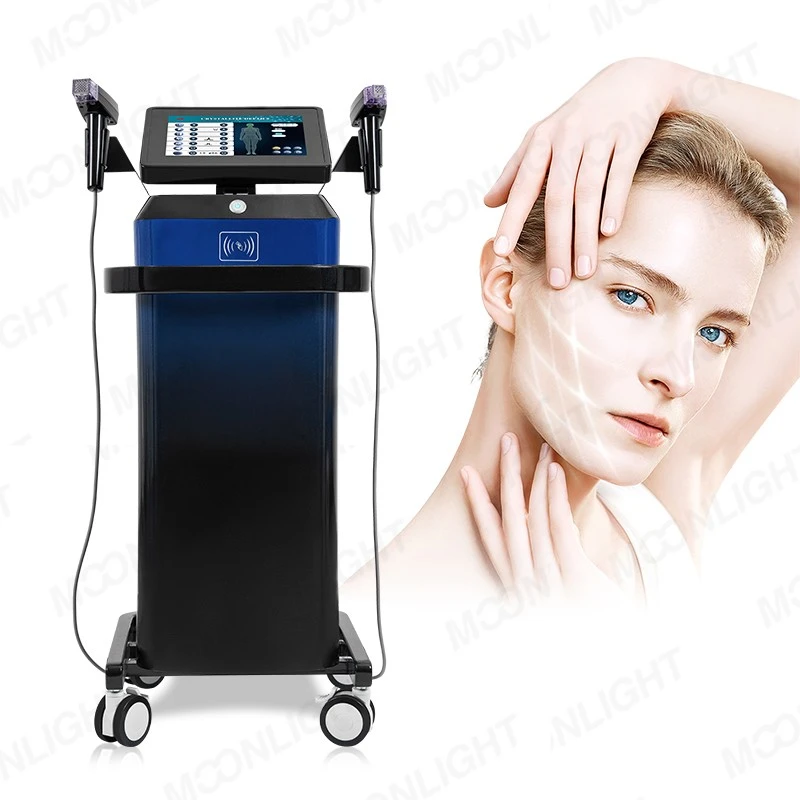
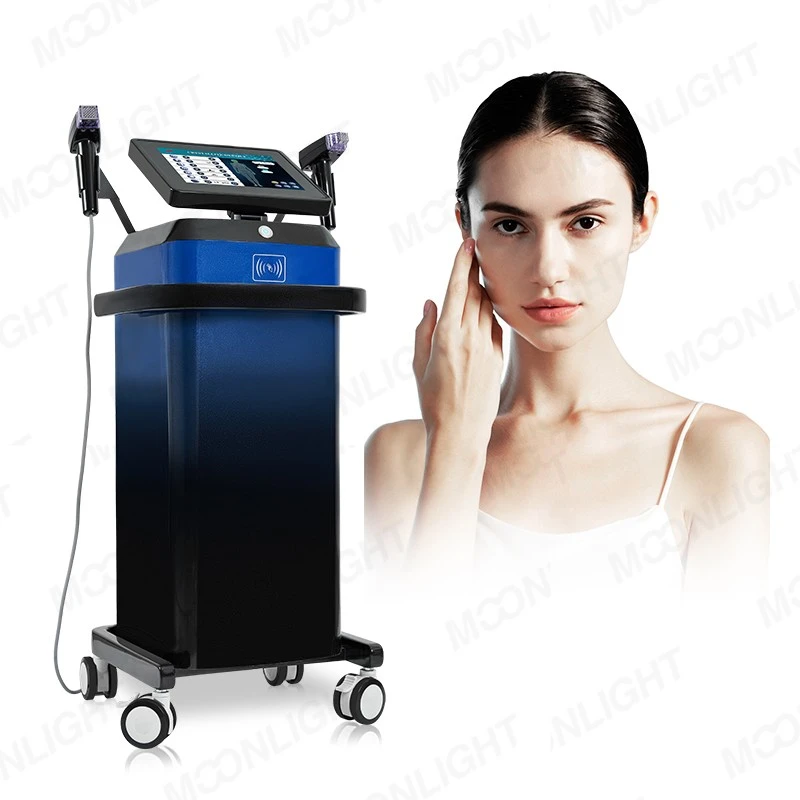
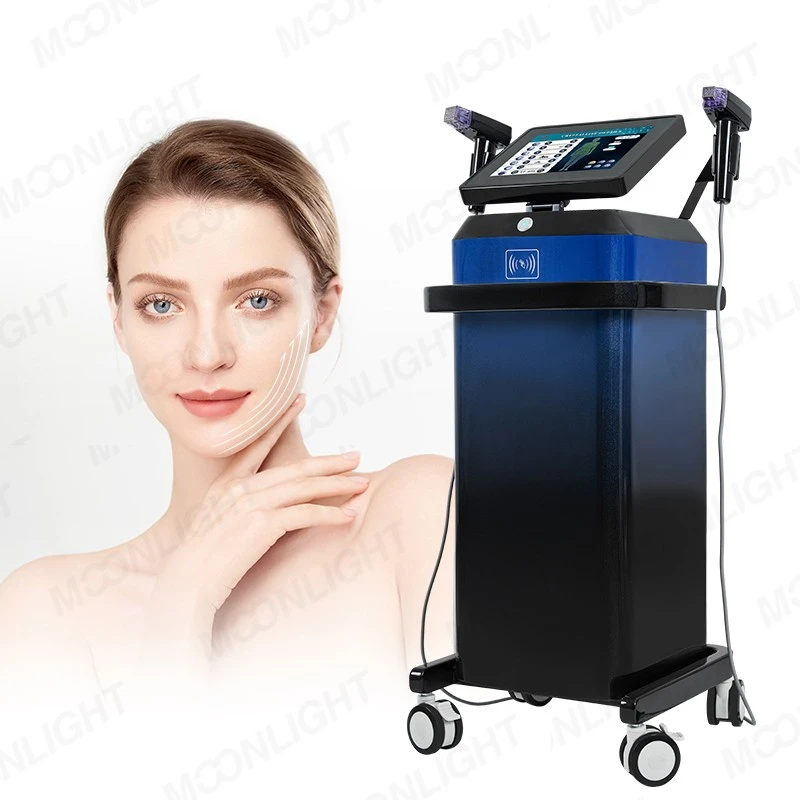
Versatile Full-Body Application: Equipped with multiple probes and dual handpieces to address a wide range of concerns, including facial wrinkles, acne, scarring, stretch marks, and axillary osmidrosis (underarm odor).
Safe, Precise, and Enhanced Absorption: Features 0.22mm insulated, ultra-fine needles that minimize pain and bleeding; creates channels for superior product absorption, boosting the efficacy of topical treatments for a synergistic, "greater than the sum of its parts" result.
Description
Technical Parameters
Radiofrequency devices have always faced a trade-off. Surface RF heats the dermis but is limited by how much energy the epidermis will tolerate before it objects. Non-insulated microneedling RF reaches deeper, but the needle shaft deposits heat along its entire path, which means the epidermis takes a share of the energy it did not need to receive. The result is more discomfort, more downtime, and a narrower margin on darker skin.
The Crystallite Depth 8 is built around insulated needles. Energy is released at the tip only, so the heat lands at the chosen depth and the epidermis is largely bypassed on the way in. That single design decision changes what the platform can do: deeper treatment without proportional surface trauma, adjustable depth from 0.5mm to 7mm, and a body protocol that can address fat and laxity together rather than sequentially.
Product Introduction: Core Function and Technical Explanation
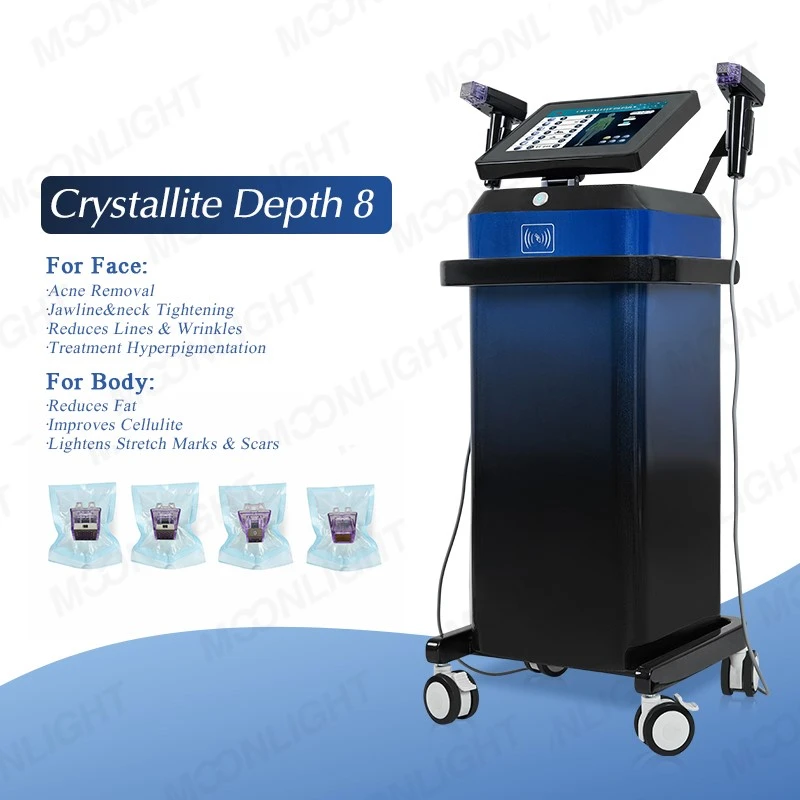
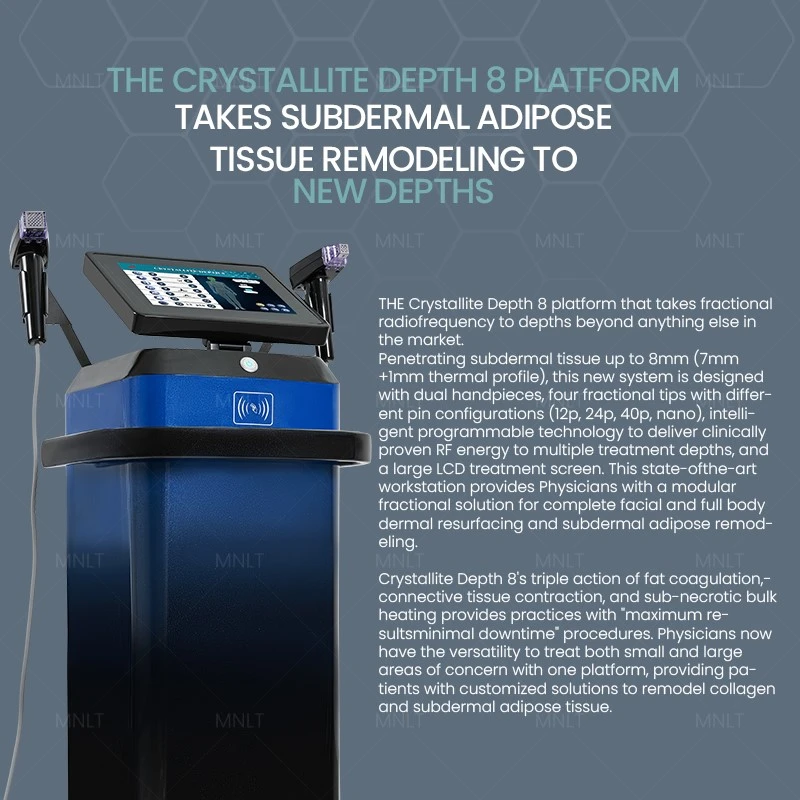
The platform is a minimally invasive fractional treatment that combines microneedles with radiofrequency energy. Under electronic control, an array of insulated needles enters the skin simultaneously, releases RF at the needle tip, and withdraws. The entire cycle takes a fraction of a second, and it repeats across the treatment area.
What happens at the tip. Because the needle body is insulated, the RF energy does not disperse along the shaft. It concentrates at the exposed tip, which is where the target tissue sits. The result is a column of controlled thermal injury at a defined depth, surrounded by untreated tissue. That untreated tissue matters - it acts as a reservoir of healthy cells that accelerates repair and reduces the inflammatory load compared with a fully ablative approach.
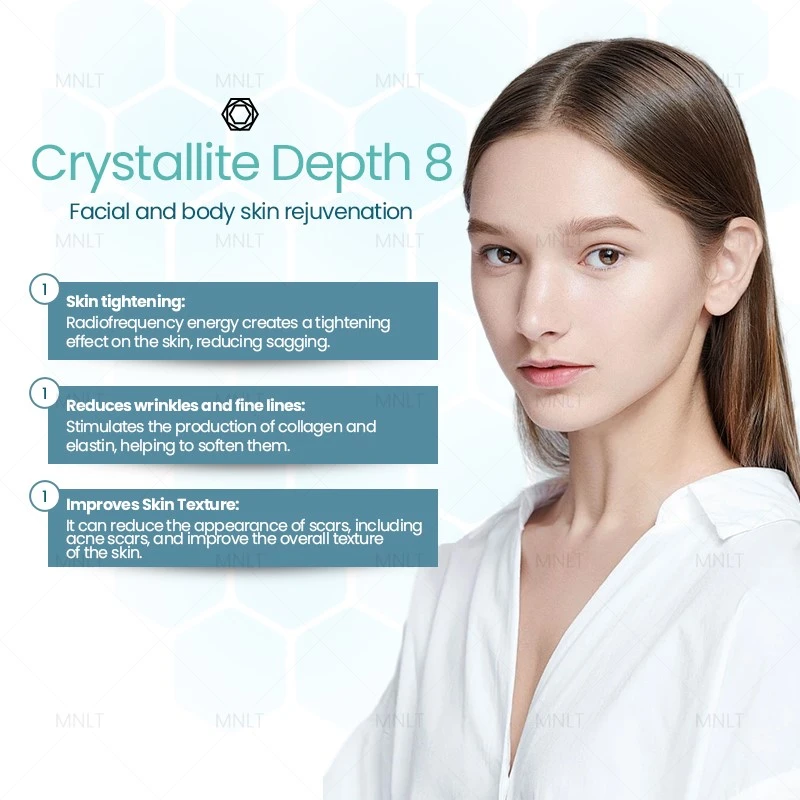
The three effects that follow. First, the micro-injury triggers the body's wound-healing cascade, which drives fibroblast activity and new collagen and elastin deposition over the following weeks. Second, the thermal component contracts existing collagen, producing an immediate tightening effect that patients can see on the day. Third, the needle channels themselves remain open briefly, which creates a delivery pathway for topical actives applied during or immediately after the pass. Clinics that retail repair serums use this window deliberately rather than treating the post-treatment product as an afterthought.
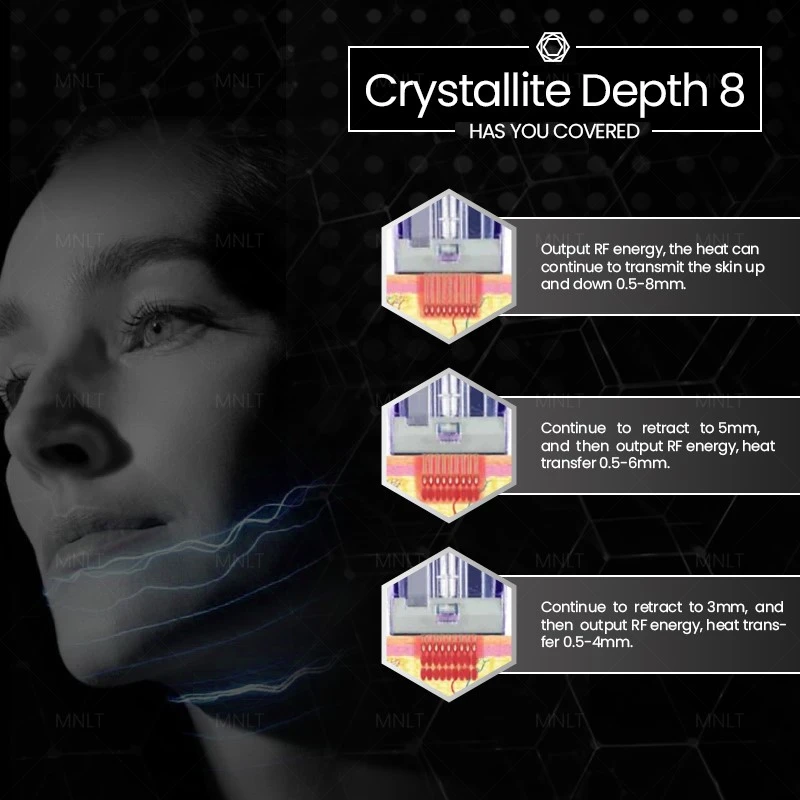
Depth control. Needle depth is adjustable between 0.5mm and 7mm. Retraction settings change the RF heat field: at maximum extension the stated heat transfer reaches approximately 8mm, at 5mm retraction it covers roughly 0.5–8mm, at 3mm retraction roughly 0.5–4mm. That range is why one platform can treat a delicate periorbital area and an abdomen in the same clinic, with different probes and different settings. Buyers should confirm the exact depth and retraction combinations in writing, since the source material describes both a 7mm adjustable needle depth and an 8mm maximum heat field, and the two figures refer to different things.
Burst mode. The system includes a burst delivery mode: deep, segmented subcutaneous heating with multi-level fixed-point superposition in a single pass. In practice this means energy is layered rather than delivered in one burst at one depth, which the manufacturer frames as producing more uniform and stable heating across the treatment column.
Needle geometry. The needle body measures 0.22mm and tapers progressively toward the tip, which is described as approximately 0.1mm. The insulation is gold-plated, and the tip has a conical profile. The practical consequences are less epidermal trauma at entry, less bleeding, lower pain, and a reduced risk of the post-inflammatory pigmentation that follows excessive surface injury - the last point being particularly relevant on Fitzpatrick III and above.
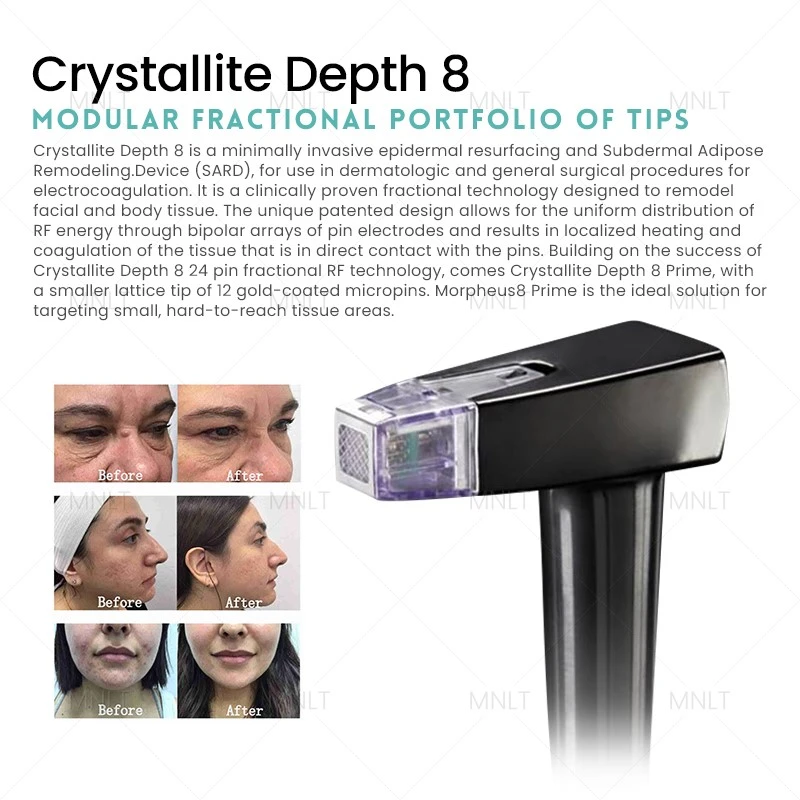
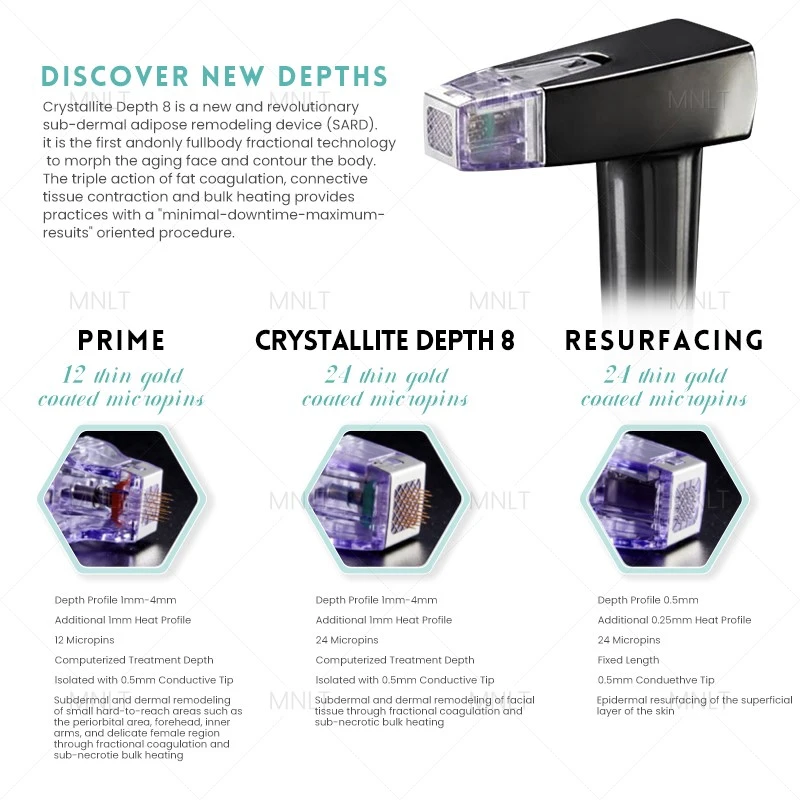
Probe options. Four probe types are available: 12-pin, 24-pin, 40-pin, and a nano crystal head. All are single-use. The pin count determines coverage per pass and the energy density at each point: 12-pin for small or contoured areas, 24-pin as a general facial workhorse, 40-pin for large body zones where speed matters, and the nano head for superficial passes and product delivery without needle penetration.
Dual handpieces. Two handpieces ship with the unit, which supports moving between facial and body work without re-cabling mid-appointment.
Scope. This is a minimally invasive treatment. It is not a surgical lift, and it is not a substitute for liposuction in clients seeking volume reduction. It carries real downtime - redness, mild swelling, and micro-crusting for several days - and clinics should present it accordingly rather than as a lunchtime procedure.
Product Advantages
Insulated needles concentrate energy at the tip. Energy is deposited at the target depth rather than along the needle path. The epidermis receives less heat, which reduces discomfort, bleeding, and pigmentation risk compared with non-insulated microneedling RF.
Adjustable depth from 0.5mm to 7mm. The same platform treats fine periorbital lines, deeper acne scarring, neck laxity, and abdominal skin. Depth is set to the indication rather than the indication being fitted to a fixed depth.
Four probe types across a wide treatment range. 12-pin, 24-pin, 40-pin, and nano head. Pin count governs coverage speed and energy density, so the operator can match the probe to the area instead of compromising.
Dual handpieces for facial and body workflows. Moving between a face and an abdomen in the same appointment does not require re-cabling or a second console.
Burst mode for layered heating. Deep segmented delivery with multi-level superposition produces more uniform heating through the treatment column than a single-depth burst.
Nano crystal head extends the platform beyond needling. Superficial passes and product delivery can be performed without needle penetration, which gives clinics a gentler option for sensitive clients and a bridge protocol between deeper sessions.
Fine needle geometry reduces surface trauma. A 0.22mm shaft tapering to roughly 0.1mm at the tip, with gold-plated insulation and a conical profile, limits entry damage and bleeding. This is the detail that determines how quickly a patient can return to normal life.
Addresses fat, laxity, texture, and scarring on one platform. Body remodeling, cellulite, stretch marks, acne scarring, active acne, and general skin quality all sit within scope. Few devices cover that breadth.
Single-use probes. Each probe is used once and discarded. That is a genuine safety and hygiene advantage and a genuine cost line - see the specification note below.
OEM and ODM through Benomi. Branding, interface language, and packaging can be adapted. Qualified orders receive a free logo design service.
Technical Specifications
| Parameter | Specification |
|---|---|
| Product name | Crystallite Depth 8 |
| Technology | Insulated microneedle fractional radiofrequency |
| Handpieces | Dual handpiece configuration |
| Needle depth adjustment | 0.5mm to 7mm |
| RF heat field | Stated up to approximately 8mm at maximum extension; retraction settings alter the effective field (confirm combinations at quotation) |
| Delivery modes | Standard fractional delivery; burst mode with multi-level fixed-point superposition |
| Needle body diameter | 0.22mm, tapering to approximately 0.1mm at the tip |
| Needle insulation | Gold-plated film; conical tip profile |
| Probe types | 12-pin, 24-pin, 40-pin, nano crystal head |
| Probe usage | Single-use, non-reusable |
| Treatment areas | Face, neck, décolleté, abdomen, flanks, thighs, buttocks, arms |
| Electrical configuration | Confirm voltage and plug type at quotation |
| Warranty | 2 years on orders placed through Benomi; confirm at quotation |
| Certifications | ISO, CE, and FDA documentation available; confirm local classification |
Probe Guide
| Probe | Typical use | Notes |
|---|---|---|
| 12-pin | Periorbital lines, upper lip, small scars, nasal contour | Lower coverage per pass; suited to precision work |
| 24-pin | Full face, neck, jawline, décolleté | General facial workhorse; balances speed and density |
| 40-pin | Abdomen, flanks, thighs, buttocks, large scars | Higher coverage per pass; suited to body protocols |
| Nano crystal head | Superficial passes, product delivery, sensitive skin | No needle penetration; useful as a bridge protocol |
Use Scenarios: Where This Platform Fits
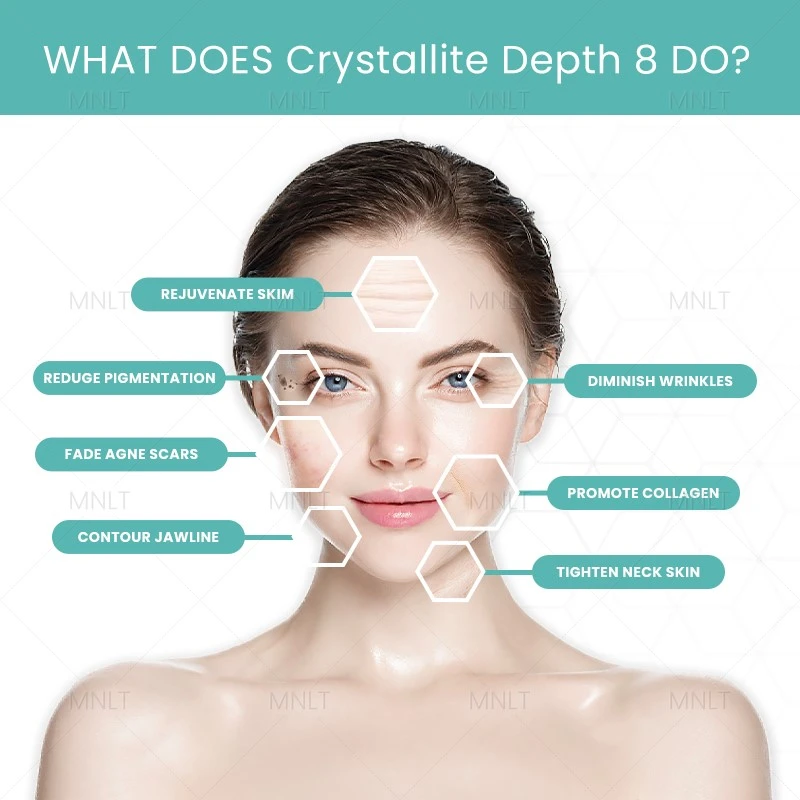
Aesthetic clinics and skin practices. The core caseload is facial rejuvenation, acne scarring, and texture work. The insulated needle design allows treatment of the neck and periorbital region where surface-trauma devices are harder to use safely.
Medical spas. Body remodeling, cellulite, and stretch marks extend the service menu beyond the face. The 40-pin probe makes abdominal and thigh protocols practical within a standard appointment slot.
Post-partum and post-weight-loss clinics. Stretch marks on the abdomen, and laxity following pregnancy or significant weight loss, sit squarely within the platform's design intent. Clinics should set realistic expectations: this is gradual improvement across a course, not a single-session transformation.
Acne-focused practices. Active inflammatory acne and post-acne scarring can be addressed on the same platform. The thermal effect on sebaceous activity and the mechanical disruption of the scar architecture are different mechanisms serving the same patient group.
Dermatology-adjacent settings. Burn scars, surgical scars, and textural irregularities are within scope. Clinics should confirm local regulatory classification before marketing scar or acne treatment as a medical service.
Hyperhidrosis and odour clinics. Axillary treatment is included in the manufacturer's indication list. This is a smaller segment but a useful differentiator for clinics already treating the axillary region.
Commonly supported programs:
Fine lines and wrinkles: crow's feet, forehead, nasolabial folds, neck lines
Facial rejuvenation, firming, and lifting
Skin texture, enlarged pores, dullness, and uneven tone
Acne scarring, acne pits, and depressed scars
Active inflammatory acne
Stretch marks and post-pregnancy laxity
Cellulite and localized fat remodeling on abdomen, thighs, and buttocks
Burn and surgical scar revision
Axillary hyperhidrosis and odour
Routine skin maintenance
Treatment Comparison: What Patients Should Expect
Before the session. Topical anaesthetic is applied for 30 to 45 minutes. This is not optional for most patients at treatment depths beyond 1.5mm. The area is then cleansed and a conductive or hydrating medium applied.
During the session. The handpiece passes over the area in overlapping strokes. Most patients describe a heat sensation and a prickling feeling, with the discomfort concentrated at deeper settings and on bony areas. The burst mode feels different from standard delivery - more sustained warmth rather than discrete pulses. A full face typically takes 30 to 45 minutes; an abdomen or pair of thighs longer.
Immediately after. The area is red, warm, and may show pinpoint bleeding. Swelling is normal, particularly around the eyes and jawline. Most clinics apply a repair mask or serum immediately, using the open channels deliberately.
Days one to three. Redness persists, and fine micro-crusting may appear, particularly at higher depths. Patients should avoid makeup for 24 hours, avoid heat and strenuous exercise, and use barrier-repair products rather than actives. Most people can return to work the next day with light cover, but social downtime of two to three days is realistic and should be stated upfront.
Days four to fourteen. Crusting resolves, texture begins to improve, and the immediate tightening settles into a more natural firmness. Collagen remodeling continues well beyond this window.
Across a course. Facial protocols typically run three to four sessions spaced four to six weeks apart. Scarring and body protocols generally require more - often four to six sessions. Results build cumulatively and are assessed at three months, not at the end of the last appointment.
Compared with surface radiofrequency. Surface RF is comfortable and has minimal downtime, but its depth is limited by epidermal tolerance. Microneedling RF reaches the reticular dermis and subcutaneous fat directly, which produces more substantial remodeling in scarring and laxity. The trade-off is real downtime and the need for anaesthesia.
Compared with non-insulated microneedling RF. Non-insulated needles heat the full needle path, including the epidermis. That increases discomfort, bleeding, and pigmentation risk, and it limits how deep the operator can go on darker skin. Insulated needles concentrate energy at the tip, which is why this platform can work at greater depths with a better surface safety profile.
Compared with fractional laser resurfacing. Fractional laser remains the stronger option for severe textural scarring and photoaging, but it carries more significant downtime, a stricter Fitzpatrick limitation, and a higher risk of post-inflammatory hyperpigmentation. Microneedling RF sits as a middle path - meaningful remodeling with a shorter recovery and broader skin-type suitability.
Compared with injectable collagen stimulators. Injectables offer volume and stimulation but no textural resurfacing. The two are complementary rather than competing, and many clinics sequence them.
Customer Feedback and Cooperation Cases
A skin clinic in Spain uses the platform as its primary acne scarring device. The clinical lead reported that the insulated needles allowed treatment at 2.5–3mm on the cheeks without the prolonged erythema the clinic had seen with its previous non-insulated system. The 12-pin probe handles periorbital and upper lip work that the team previously avoided.
A medical spa in the United Arab Emirates built a body program around the 40-pin probe for abdominal stretch marks and post-pregnancy laxity. The owner noted that the dual handpieces shortened changeover between a facial and a body appointment, and that the nano head gave the team a gentler option for clients hesitant about needling.
A dermatology-adjacent practice in South Korea uses burst mode for deeper facial passes and standard delivery for superficial work. The practitioners reported that layered heating produced more even results across the treatment area than single-depth delivery, particularly on the jawline and lower cheek.
A clinic in Southeast Asia cited the single-use probe model as a selling point during consultations. Clients in the region ask detailed hygiene questions, and being able to show a sealed, single-use probe before opening it in front of them has simplified the consent conversation.
Factory Strength and Certifications
Weifang Benomi Electronic Technology Co., Ltd. is based in Weifang, Shandong Province, China, with more than 18 years in the research, development, production, and service of professional aesthetic equipment. The production facility includes an international-standard dust-free workshop, which requires investment in air filtration and environmental control and is uncommon in this equipment category.
Benomi holds ISO, CE, and FDA certification documentation across its product range. Inspection procedures and operating specifications are documented and followed at each production stage. Certificate copies are available during the inquiry process. Buyers should confirm the regulatory classification of microneedling RF equipment in their own market and the permitted wording for scar, acne, and hyperhidrosis claims before launch.
OEM and ODM development is supported. Custom logo, interface language, housing branding, and packaging can be adapted. Qualified orders receive a free logo design service, and the engineering team handles voltage configuration and plug types for specific markets.
Every unit is tested before shipment with video documentation. Installation guidance and operator training are handled remotely, covering probe selection, depth setting, retraction and heat-field adjustment, burst mode use, and aftercare protocols. Engineers respond within 24 hours, and warranty terms are confirmed at quotation. Orders placed through Benomi carry a two-year warranty with lifelong maintenance support. Probe supply is maintained as a standing item for clinics running regular treatment schedules.
Wholesale Policy
| Item | Policy |
|---|---|
| Minimum order | One unit for evaluation; tiered distributor pricing from three units |
| OEM and ODM | Available. Custom logo, interface language, housing branding, and packaging. Free logo design for qualified orders. |
| Production time | 7–12 working days standard; 15–20 working days for customized builds |
| Shipping | Express couriers for single units; air or sea freight for volume orders |
| Payment | T/T, Western Union, or negotiated terms for established distributors |
| Packaging | Reinforced carton with foam lining; handpieces and probes packed separately |
| Probe supply | 12-pin, 24-pin, 40-pin, and nano head available as ongoing consumable orders; pricing confirmed at quotation |
| Warranty | Two years on orders placed through Benomi; confirm details at quotation |
| After-sales | 24-hour engineer response; remote training; spare parts and replacement handpieces available |
| Documentation | User manual, probe and depth guide, aftercare protocol, contraindication checklist, certification copies, and test report included |


Frequently Asked Questions
Q: What makes insulated needles different from standard microneedling RF?
A: With non-insulated needles, RF energy disperses along the entire needle shaft, so the epidermis receives heat it does not need. Insulated needles release energy only at the exposed tip, which concentrates the thermal effect at the target depth. In practice that means less surface trauma, less bleeding, lower pain, and a reduced risk of post-inflammatory pigmentation - which is why deeper settings become viable on a wider range of skin types.
Q: How deep can it actually treat?
A: Needle depth is adjustable from 0.5mm to 7mm. The RF heat field is stated to reach approximately 8mm at maximum extension, with retraction settings changing the effective field - roughly 0.5–8mm at 5mm retraction and 0.5–4mm at 3mm retraction. Buyers should confirm the exact depth and retraction pairings in writing at quotation, since the needle depth figure and the heat field figure describe different things.
Q: Which probe should a clinic start with?
A: A 24-pin for general facial work, a 12-pin for periorbital and precision areas, and a 40-pin for body protocols. The nano head is worth ordering for sensitive clients and for product-delivery passes without needling. Most clinics begin with 24-pin and expand from there.
Q: Are the probes reusable?
A: No. All probes are single-use and should be discarded after each treatment. This is a hygiene and safety requirement, and it is also a per-treatment cost that should be built into session pricing from the start.
Q: How painful is the treatment?
A: With topical anaesthetic applied for 30 to 45 minutes, most patients describe heat and prickling rather than sharp pain. Deeper settings and bony areas are more uncomfortable. The treatment is not comfortable without numbing at depths beyond about 1.5mm, and clinics should not present it as painless.
Q: What does downtime look like?
A: Redness, warmth, and some swelling on the day, followed by possible micro-crusting for two to three days at higher depths. Most patients return to work the next day with light cover, but social downtime of two to three days is realistic. Makeup should be avoided for 24 hours, and heat, exercise, and actives for longer.
Q: How many sessions are needed?
A: Facial rejuvenation typically runs three to four sessions spaced four to six weeks apart. Acne scarring and body protocols usually need four to six. Results are assessed at around three months, not immediately after the last session.
Q: Can it treat darker skin tones?
A: The insulated needle design reduces epidermal injury, which lowers the pigmentation risk that limits non-insulated devices on Fitzpatrick III and above. That does not remove the risk entirely. Conservative depths, adequate cooling between passes, and a test area remain good practice, and clinics should document their protocol.
Q: Can it be used on active acne?
A: Yes, and it is listed among the manufacturer's indications. The thermal effect acts on sebaceous activity and the inflammatory environment. Clinics should avoid treating over actively infected or weeping lesions and should adjust depth and energy accordingly.
Q: What aftercare is required?
A: Barrier-repair products for the first week - hyaluronic acid, ceramides, antioxidants. No acids, retinoids, or alcohol-based products for at least seven days. Strict sun protection for a month. No saunas, hot baths, or strenuous exercise for the first few days. Post-treatment serum application should use the open-channel window deliberately, with products selected for repair rather than strong actives.
Q: Who should not be treated?
A: Contraindications generally include pregnancy and breastfeeding, active skin infection or open wounds in the area, recent isotretinoin use, implanted electronic devices over the treatment zone, metal implants at the treatment site, history of keloid scarring, malignancy, and uncontrolled diabetes. Clinics should use a written screening checklist and take a full medical and cosmetic history, including recent fillers and threads.
Q: Can it be combined with other treatments?
A: It is commonly sequenced with injectables, threads, and light-based treatments, but timing matters. Clinics should set their own interval policy - for example, allowing adequate time after fillers before needling the same area - and document it in the consent process.
Q: What are the space and electrical requirements?
A: The system requires a treatment couch, a trolley or stand for the console, topical anaesthetic facilities, and the electrical supply confirmed at quotation. No plumbing or special ventilation is needed.
Q: Can the device be branded for our clinic or distribution line?
A: Yes. OEM and ODM cover logo, interface language, housing branding, and packaging. Qualified orders receive a free logo design service.
Q: What is the minimum order and lead time?
A: One unit for evaluation, with distributor pricing from three units. Standard production takes 7–12 working days; customized builds take 15–20 working days. Shipping time depends on destination and freight method.
Q: How do I request a quotation?
A: Send us a message with your country, clinic type, the indications you plan to treat, your expected weekly treatment volume, and whether you need probe supply pricing alongside the device. We will reply within one business day with pricing, the full datasheet, freight estimates, certification documents, and a video showing depth adjustment and probe changeover.
Request Pricing and a Demonstration Video
Tell us which indications matter most to your practice - facial rejuvenation, acne scarring, body remodeling, stretch marks, or a combination - and we will send a full quotation, probe pricing for your expected volume, the electrical specification for your market, certification copies, and a video showing depth setting and the dual-handpiece workflow.
Weifang Benomi Electronic Technology Co., Ltd.
Weifang, Shandong, China
More than 18 years in professional aesthetic equipment manufacturing
[Send Inquiry] - Include your country, intended applications, and target quantity for the fastest response.
Hot Tags: crystallite depth 8: a fractional microneedling rf platform for facial and full-body remodeling, China crystallite depth 8: a fractional microneedling rf platform for facial and full-body remodeling manufacturers, factory
Previous
No InformationSend Inquiry


